
Health & Wellness Made Clear, Simple and Doable

About
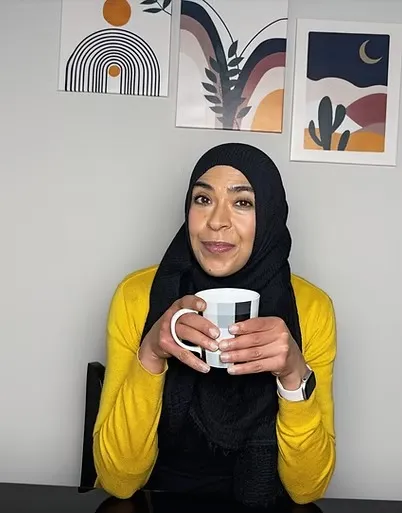
Hi, I’m Dr. Esra Shermadou, a board-certified physician passionate about making health clear, simple, and doable for busy professionals like you. I know how overwhelming it can be to navigate wellness, health, and self-care while juggling a full life. That’s why I created this space—to provide practical, science-backed health insights that fit seamlessly into your routine.
Here, you’ll find:
✔ Simple strategies for better health without feeling overwhelmed
✔ Expert advice on sustainable wellness in your busy life
✔ Actionable tips to help you feel your best every day
Recent Articles

Where Did My Muscle Go? What Women Over 40 Need to Know After GLP-1 Weight Loss
You Lost the Weight. So Why Do You Feel Worse?
You did everything right. You finally found something that worked, the scale moved, the clothes fit differently, people noticed. And then, somewhere around month three or four, you realized something was off. You feel softer in places you didn't expect. You're tired in a way that isn't just busy-life tired. You got in the gym, you tracked your protein, and somehow you still feel like you're losing ground instead of gaining it.
You're not imagining that. And the question you're asking, "where did my muscle go?", is exactly the right question. It just doesn't have a simple answer, and that's the part nobody told you when they handed you the prescription.
What's happening has a real explanation, and it is addressable. Let me walk you through it.
What GLP-1 Medications Actually Do to Your Body
Semaglutide and tirzepatide work primarily by reducing appetite and slowing gastric emptying. For most women, that's what finally makes the difference after years of feeling like hunger was working against every effort they made. The medication quiets that signal, and the weight comes off.
The problem is that appetite suppression is not selective. When your overall intake drops significantly, your body loses weight, but not exclusively from fat. Depending on how much protein you're eating, how you're training, and what your hormones are doing right now, a meaningful portion of that weight loss can come from muscle. And because some people lose weight too fast on these medications–due to overdosing or just oversuppression of appetite–you can have greater weight loss from lean tissue, like muscle, rather than fat. The medication doesn't know the difference between fat and muscle. That distinction is something you have to protect actively.
And here's where it gets more complicated for women over 40.
The Compounding Problem Nobody Is Talking About Enough
Estrogen is not just a reproductive hormone. It plays a direct role in muscle protein synthesis, which is the process your body uses to build and maintain muscle tissue. As estrogen declines through perimenopause and menopause, your body becomes less efficient at that process. The signal to build and hold muscle gets quieter. And the threshold for what it takes to stimulate muscle growth gets higher.
So you're working with two stacked challenges at once: a medication that is, by design, suppressing your appetite and reducing your total intake, and a hormonal environment that already requires more protein and more resistance stimulus to maintain the muscle you have. Neither of these alone would be catastrophic. Together, they create exactly the situation you're describing: weight loss on the scale, but a body composition that feels softer, weaker, and not quite like you expected.
Beyond the hormonal piece, there's something else worth naming. As overall caloric intake drops on a GLP-1, many women are eating far less than they realize, and protein is the first casualty. When food volume is low, most people unconsciously prioritize carbohydrates and fats because they're more calorie-dense and easier to eat in small portions. Protein-rich foods, especially the ones that actually support muscle, require more deliberate planning. Without that structure, it's entirely possible to be eating what feels like "enough" while still running a significant protein deficit relative to what your body actually needs right now.
Find out which common weight-loss myth might be working against you, and what to do about it.
Take the quiz →Why the Advice You've Already Tried Isn't Landing
If you've been in a fitness community, you've seen the general guidance: eat more protein, lift heavy, do progressive overload. That advice is not wrong. But the generic version of it was written for a different body than the one you're in right now.
Women, in general, require higher protein goals per meal as we get older, in order to stimulate protein synthesis. This is especially true for women over 40 who are in a caloric deficit on a GLP-1. The threshold for stimulating muscle protein synthesis is higher in this hormonal environment. I typically recommend 30 to 40 grams of protein per meal as a functional target, depending on the individual, with attention to the leucine content of those sources specifically. Leucine is the amino acid that most directly triggers the muscle-building signal, and it's found in highest concentrations in animal proteins: eggs, meat, fish, dairy.
The training piece matters just as much. Cardio and HIIT keep many women in this situation very busy, but they are not the primary tools for preserving lean mass. Progressive resistance training, lifting with a structured plan that increases the challenge over time, is what tells your body that muscle is worth keeping. Without that signal, especially in a caloric deficit, the body has little reason to prioritize maintaining tissue that isn't being demanded of it.
What Preservation Actually Looks Like
This is not about doing more. Most of the women I work with in this situation are already doing a lot. It's about doing the right things in the right order.
On the nutrition side, the priority is hitting protein targets consistently, even on low-appetite days. This is where GLP-1 suppression can work against you most directly. When you're not hungry, protein is the last thing you want. I work with patients on building a structure that front-loads protein earlier in the day, before appetite suppression peaks, and uses high-quality, leucine-rich sources strategically. We do this in a way that feels easy and is incorporated without resistance in each patient’s life.
On the training side, the shift is toward structured resistance training with progressive overload as the anchor, not an add-on. Cardio has its place, but if you're limited on time and energy, and most women in this season of life are, resistance training is the non-negotiable. Two to three sessions per week, built around compound movements that work large muscle groups, with a plan that actually tracks and increases load over time. That's the stimulus your body needs to hold onto what you've built.
Beyond workouts, this also means looking at sleep and recovery as metabolic variables, not lifestyle preferences that only occur “if” you have time. Muscle is built during recovery, not during the workout itself. Poor sleep over time elevates cortisol, and chronically elevated cortisol accelerates the breakdown of muscle tissue. For women who are also navigating the sleep disruption that often accompanies perimenopause, this is not a minor footnote.
And for many women I work with, hormone optimization is part of the picture. Estrogen therapy, along with progesterone, plus or minus testosterone, when appropriate and clinically indicated, directly supports the hormonal environment that muscle preservation depends on. I do not treat it as a standalone solution, but I also do not ignore it when it's relevant. It belongs in the conversation alongside training and nutrition, not separated from them.
The Weight Loss Worked. Now Protect What's Under It.
The GLP-1 did what it was supposed to do. The window it opened is real, and it matters. But a prescription without a plan for what comes next leaves you smaller and more depleted rather than stronger and more capable. That's the gap I built my practice to close.
Once you understand why your body is responding the way it is, the path forward gets a lot clearer. This is not about working harder. It's about working with your actual physiology, the hormonal environment you're in right now, the protein thresholds that apply to your body specifically, the training approach that matches the goal. Not a generic plan written for someone half your age.
If you're not sure where your current approach is falling short, the Muscle and Metabolism Myth Check is a good place to start. It's free, it takes a few minutes, and it will surface what's actually missing in your protocol so you know exactly what to address first.
Frequently Asked Questions
I'm eating a lot of protein and still lifting. Why am I still losing muscle on my GLP-1?
This is one of the most common things I hear, and it usually comes down to one of three issues: total protein is not as high as it seems when you account for how little overall food you're eating, the per-meal amounts are too small to reliably trigger muscle protein synthesis in a post-40 hormonal environment, or the training stimulus isn't progressive enough to signal that muscle needs to be maintained. Often it's a combination of all three. A 20-gram protein shake that worked at 35 may not be sufficient at 47 when estrogen is declining and your body's muscle-building threshold has shifted. I typically look at all three variables together rather than assuming one is the problem.
How much protein do I actually need while on semaglutide or tirzepatide?
More than most general guidance suggests. The standard recommendations were not built for women in a caloric deficit during perimenopause or menopause. I work with my patients directly to personalize a goal that works for them, with the goal of getting to at least 30 grams per meal, if possible. Everyone is different and this can take time. Total daily protein in the range of 1.2 to 1.6 grams per kilogram of body weight is a reasonable clinical starting point for muscle preservation during weight loss in this population, but the per-meal distribution matters as much as the daily total.
Will stopping the GLP-1 medication make the muscle loss worse?
Stopping a GLP-1 without a preservation plan in place does carry real risk, primarily because appetite returns and weight regain tends to favor fat over muscle if the habits are not already established. The muscle you lost during the medication phase does not automatically return when you stop. This is why I treat the medication as one part of a larger protocol rather than the protocol itself. Whether you stay on it long-term or transition off, the strength training and protein structure need to be in place before that transition happens, not after.
Is what I'm experiencing just aging, or is something actually wrong?
The distinction matters. Age-related muscle loss is real, but it is not inevitable, and it is not the complete explanation for what most of the women I see are going through. The combination of hormonal shifts, appetite suppression from a GLP-1, inadequate protein per meal, and a training approach that relies too heavily on cardio creates a very specific and correctable set of conditions. Aging is a context, not a diagnosis. When I work up a patient experiencing this, I am looking at hormones, body composition, protein intake, and training structure together, not attributing everything to a number on a birthday.
Should I be on hormone therapy if I'm also on a GLP-1 for weight loss?
That is a clinical question that depends on your individual history, labs, and where you are in the perimenopause or menopause transition. What I will say is that the two are not mutually exclusive, and for many women, estrogen therapy is directly relevant to muscle preservation because of estrogen's role in muscle protein synthesis. I do not default to one or the other. I look at the full picture: what the hormones are doing, what the training looks like, what the nutrition structure is, and what the goals are. If hormone optimization is appropriate for you, it belongs in the same conversation as your GLP-1 protocol, not in a separate appointment with a different provider who doesn't know the full picture.
Feeling heard by your doctor shouldn’t be a luxury
If you've been doing everything right and still not seeing results, the problem isn't you, it's the approach. A real, multi-modal plan addresses what's actually happening in your body.
A free 2-minute quiz to find out which common myth might be working against your results, and what to do instead.
Take the quiz →See if Sakinah Health is the right fit for you. A short, no-pressure conversation about your goals and history.
Book your meeting →Practical, no-fluff metabolic health insights, straight from a powerlifting DPC doctor who has seen what actually works.
Join the newsletter →



© 2026 Sakinah Health