
Health & Wellness Made Clear, Simple and Doable

About
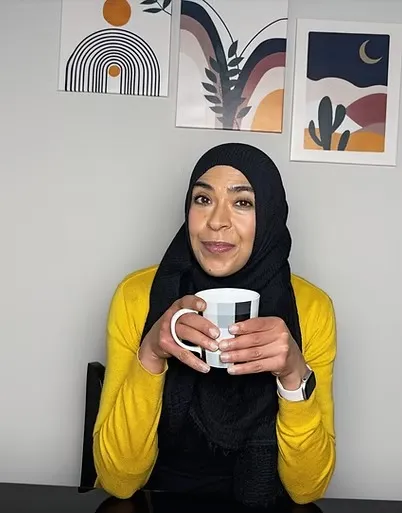
Hi, I’m Dr. Esra Shermadou, a board-certified physician passionate about making health clear, simple, and doable for busy professionals like you. I know how overwhelming it can be to navigate wellness, health, and self-care while juggling a full life. That’s why I created this space—to provide practical, science-backed health insights that fit seamlessly into your routine.
Here, you’ll find:
✔ Simple strategies for better health without feeling overwhelmed
✔ Expert advice on sustainable wellness in your busy life
✔ Actionable tips to help you feel your best every day
Recent Articles

A Doctor’s Guide to Getting Strong After 40
I hear this in my office constantly: "I'm doing exactly what I used to do, and nothing is working anymore." You're eating the same way, you're still showing up to the gym, and yet the scale is creeping up and your midsection feels different. Or you're noticing that your workouts feel harder than they should, that your strength just isn't there the way it used to be. If any of that sounds familiar, I want you to know you are not imagining it.
This is not a willpower problem. It is a predictable biological shift, driven by real changes in your hormones and, critically, your muscle mass. And the advice most women over 40 receive, which usually amounts to eating less and moving more, misses the point entirely because it does not address what is actually happening underneath.
What I want to walk you through is why the old rules have stopped working, and why the importance of strength training for midlife women cannot be overstated. Building and preserving muscle is, in my clinical experience, the most powerful lever you have for reclaiming your metabolic health and building a body that stays strong and resilient well into the decades ahead.
Why “Eat Less, Move More” Fails Women Over 40
For decades, women have been handed the same tired advice: eat less, move more, and the weight will come off. And look, energy balance does matter. But that framing is so incomplete it borders on harmful, because it completely ignores what is actually happening inside a woman’s body after 40. When estrogen starts declining through perimenopause and into menopause, it sets off a whole cascade of changes in how your body processes and stores energy. This is not a willpower problem. It is a hormonal shift that conventional advice was never designed to address.
I understand this personally. My own health journey, which included a cancer diagnosis and the hormonal challenges that followed, forced me to completely rethink my relationship with exercise. I stopped seeing it as a punishment for eating or a tool for burning calories, and I started understanding it as something that builds real, lasting strength. Strength training became the foundation of how I rebuilt my body and my health. That shift changed everything for me, and it is the same shift I work through with my patients every day.
Here is what the hormonal shifts of midlife actually do: they make your body significantly more prone to insulin resistance. That means your cells stop responding to insulin the way they should, blood sugar regulation gets harder, and your body tends to store more fat, especially around the abdomen.
This same window of life also tends to pile on stress from every direction: kids, aging parents, career demands, and everything in between. Over time, that chronic stress drives up cortisol, and elevated cortisol actively encourages fat storage right around the belly. Now add aggressive calorie restriction and hours of steady-state cardio on top of that, and you are not solving the problem. You are making it worse. More cortisol, a slower metabolism, and muscle tissue being broken down for fuel. That is the cycle so many women get stuck in, and it is not their fault. The intersection of menopause and metabolic health calls for a smarter, more targeted approach than conventional medicine has typically offered.
The Hidden Saboteur: Understanding Sarcopenia and Metabolic Slowdown
The biggest reason it gets harder to maintain your weight and your strength as you age comes down to a process called sarcopenia. That is the medical term for age-related muscle loss. Starting in your 30s, you can lose somewhere between 3 and 8% of your muscle mass per decade, and that rate picks up considerably after 50.
Think of your muscle tissue as your body's metabolic engine. The more of it you have, the more calories your body burns just sitting still. Muscle is metabolically active, meaning it is constantly consuming energy simply to exist. Fat tissue, by comparison, does very little in that department. So as sarcopenia quietly chips away at your muscle over time, that engine gets smaller. Your body needs fewer calories to run, which means the same meals that kept your weight steady in your 30s now tip the scale in the other direction. This is a root cause of so much of the weight gain women experience with age, and it has nothing to do with willpower or discipline.
The relationship between muscle mass and metabolic health runs deeper than most people realize. Losing muscle does not just slow your metabolism. It also drives down insulin sensitivity, raises your risk for type 2 diabetes, limits what your body can physically do, and weakens your bones over time. You are not just losing strength. You are losing the tissue that keeps your entire metabolic system running and your independence intact. This is exactly why fixating on the number on the scale tells you so little. The real goal is body composition: preserving and building muscle, not just watching a number go down.
See if Sakinah Health is the right fit for you. A short, no-pressure conversation about your goals, your history, and whether our approach makes sense for your life.
Book your meeting →Why Strength Training Is the Most Important Thing Midlife Women Can Do for Their Health
You cannot stop the aging process, and I would never pretend otherwise. But you do have a powerful tool to push back against sarcopenia and the metabolic consequences that come with it: strength training. Lifting weights, or using your own bodyweight for resistance, sends a direct signal to your body to build and maintain lean muscle tissue. That is the foundation of getting strong and staying healthy well into your 40s, 50s, 60s, and beyond.
Here is what I tell every woman who walks into my practice: strength training is not optional at this stage of life. It directly counteracts age-related muscle loss. Building and maintaining muscle boosts your metabolic rate, improves insulin sensitivity, increases bone density to help ward off osteoporosis, and builds the kind of functional strength that keeps you independent and active for decades to come.
And the benefits go well beyond what happens inside a gym. A consistent strength training routine touches almost every system in your body. Let me break down what that actually looks like.
- Boosted Metabolic Rate: More muscle means a higher resting metabolic rate. Your body burns more energy throughout the day, whether you are sitting at your desk, running errands, or sleeping. That metabolic engine keeps working even when you are not.
- Improved Insulin Sensitivity: Muscle is one of the primary places your body clears glucose from the bloodstream. The more muscle you have, the better your body manages blood sugar, which reduces your risk of insulin resistance and makes weight management significantly more manageable, including when it comes to reducing abdominal fat after 40.
- Stronger Bones: Resistance training places mechanical stress on bone tissue, and that stress signals your bones to become denser and more resilient. For postmenopausal women who face a real and significant risk of osteopenia and osteoporosis, this is one of the most effective interventions available.
- Enhanced Physical Independence: Strength training translates directly into your everyday life. Carrying groceries, lifting a bag into the overhead bin, keeping up with your grandchildren. These things get easier and safer when you are building real strength. That is what long-term independence actually looks like.
- Improved Body Composition: Strength training helps you build lean tissue and reduce excess fat in a way that cardio alone simply cannot replicate. The goal is not just a lower number on the scale. It is a stronger, more capable body that serves you well for the long haul.
Your Action Plan: How to Start Strength Training Safely
Starting a strength training program does not mean you need to become a competitive powerlifter or rearrange your entire life around a gym schedule. The most effective routine is honestly the one you will actually do consistently. The goal is straightforward: challenge your muscles enough to stimulate growth, then recover, then do it again. In my practice, I see the impact that even a simple, well-structured routine can have on energy, metabolic health, and how people feel day to day.
You can begin at home with just your body weight. Focus on foundational movements that work multiple muscle groups at once, because that is the most efficient way to build a real base of strength and learn how to increase skeletal muscle mass without needing a lot of equipment or time. Aim for two to three sessions per week on non-consecutive days so your muscles have the space to recover and actually grow between sessions.
Here is a simple, four-move routine to get you started. The next step is yours to take:
- Bodyweight Squats: Stand with your feet shoulder-width apart. Lower your hips back and down as if you are sitting into a chair, keeping your chest up and your back straight. Go as low as you comfortably can, then press through your heels to return to standing. Aim for 3 sets of 10 to 12 repetitions. This is one of the most important movements you can train, because your legs are your largest muscle group and a major driver of metabolic health.
- Wall Push-ups: Stand facing a wall, roughly arm's length away. Place your hands on the wall a little wider than your shoulders. Bend your elbows and bring your chest toward the wall, keeping your back straight and your core engaged. Push back to the starting position. Wall push-ups are a genuinely effective way to build the upper body strength you need to eventually move to floor push-ups. Aim for 3 sets of as many reps as you can complete with solid form.
- Glute Bridges: Lie on your back with knees bent and feet flat on the floor, hip-width apart, arms resting at your sides. Squeeze your glutes and lift your hips until your body forms a straight line from your shoulders to your knees. Hold for a beat, then lower back down with control. Aim for 3 sets of 12 to 15 repetitions. Your glutes are one of the most powerful and metabolically active muscle groups in your body, so do not skip this one.
- Plank: Position yourself on your forearms and toes, body in a straight line from head to heels. Engage your core and your glutes, and resist the urge to let your hips sink toward the floor. Hold for 20 to 30 seconds and aim for 3 sets. Core stability is the foundation underneath every other movement you will ever do, in the gym and in real life. Where you start does not matter. That you start does.
Frequently Asked Questions
Why am I losing muscle mass even though I workout?
If your workouts consist primarily of cardio like running or cycling, you may not be providing the right stimulus for muscle growth. While excellent for cardiovascular health, endurance exercise does not effectively challenge your muscles to build new tissue. To combat sarcopenia, you need resistance training. Also, ensure you are eating enough protein (a key building block for muscle) and getting adequate rest, as muscle repair and growth happen during recovery, not during the workout itself.
Why am I gaining so much weight in my 50’s?
Weight gain in your 50s is often a combination of factors. The acceleration of sarcopenia means your metabolism is significantly slower than it was in previous decades. Hormonal changes from menopause also shift fat storage towards the abdomen and increase insulin resistance. This makes your body more sensitive to carbohydrates and more likely to store excess energy as fat. It is a perfect storm of a slower metabolism and hormonal signals that favor fat storage.
How to stop menopause weight gain?
Stopping menopause weight gain requires a multi-modal approach. Prioritize strength training two to three times per week to rebuild lost muscle and boost your metabolism. Focus on a protein-rich diet to support muscle synthesis and promote satiety. Manage stress through practices like meditation or walking, as high cortisol drives belly fat. Prioritize sleep, because poor sleep disrupts the hormones that regulate appetite and fat storage. A pill alone is not the answer; a comprehensive plan is.
Is menopause weight gain inevitable?
No, it is not inevitable, but it does require a proactive plan and different strategy than you may have used in the past. Your body’s rules have changed, so your approach must change too. While some women may find it more challenging to manage their weight during this time, it is entirely possible to maintain a healthy body composition. By focusing on building muscle through strength training and supporting your body with proper nutrition and lifestyle habits, you can work with your physiology instead of against it.
Why am I always tired and have no energy as a female over 40?
Fatigue in women over 40 can have many sources. Hormonal fluctuations, particularly of estrogen and progesterone, can disrupt sleep and cause fatigue. Loss of muscle mass can also contribute, as a less muscular body is a less efficient, less energetic body. Other potential causes include iron deficiency (anemia), thyroid issues, and chronic stress. It is important to address lifestyle factors like sleep and nutrition, but if fatigue is persistent, you should speak with your physician to rule out underlying medical conditions.
Strength is a Choice, Not Just a Number on a Scale
Feeling strong, capable, and in control of your body after 40 is not a matter of luck; it is a matter of strategy. The frustration you have felt is valid, but it does not have to be your future. By shifting your focus from endless cardio and calorie counting to building foundational strength, you give your body the tools it needs to thrive through midlife and beyond.
As a physician board-certified in Obesity Medicine, I can tell you that strength is one of the most powerful forms of medicine available. It is the key to a faster metabolism, stronger bones, and a resilient body. It is about so much more than aesthetics. It is about showing up for your life with energy and vitality.
The first step is often the hardest, but it is also the most important. Start small, stay consistent, and remember that you are building a stronger future with every single repetition.
Feeling heard by your doctor shouldn’t be a luxury
If you've been doing everything right and still not seeing results, the problem isn't you — it's the approach. A real, multi-modal plan addresses what's actually happening in your body.
See if Sakinah Health is a good fit for your needs. A short conversation about your goals, your health history, and what a truly comprehensive approach could look like for you.
Book your 15-minute meeting →Practical, no-fluff metabolic health insights — straight from a powerlifting DPC doctor who has seen what actually works.
Join the newsletter →



© 2026 Sakinah Health